
Using Civic Engagement to Expand Food Access
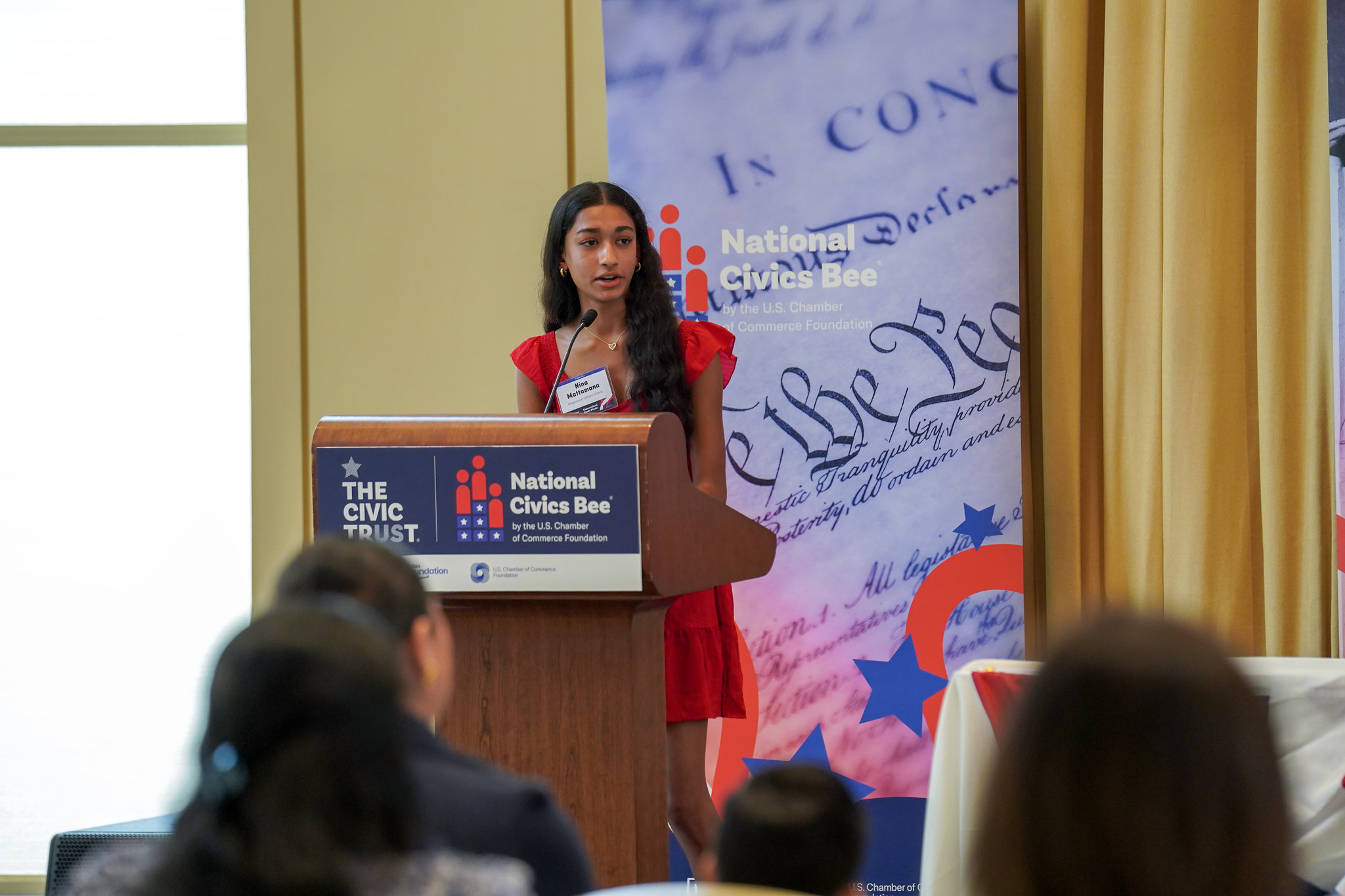
After learning about the National Civics Bee® from her history teacher, Nina entered the competition in Connecticut with two friends and proposed a solution to address food insecurity: a community-based grocery store model designed to serve food deserts. What began as a school opportunity quickly became a way for Nina to connect her interest in civic life with an issue she cared deeply about.
She thought it would be “a great way to grow my civics knowledge and an idea that I was passionate about.”
Food insecurity is a global issue, but Nina’s interest began close to home. While volunteering at her church’s weekly community meal, she saw firsthand how many people in her own neighborhood were struggling to access reliable meals. Volunteering, she said, opened her eyes. “It kind of amazed me that we could have such amazing things in the world like AI and self-driving cars, but there are still people in the world who don’t know where their next meal is coming from.”
That realization became the foundation for her National Civics Bee essay. With feedback and encouragement from friends and family, Nina continued refining her idea and thinking through how a community-based grocery store could help expand access to food in underserved areas. The process pushed her to move beyond awareness and begin considering the practical steps needed to turn an idea into action.
Through the National Civics Bee, Nina gained a deeper understanding of how young people can use civic knowledge to address real-world challenges. The competition gave her a platform to research a problem, develop a proposal, and communicate her solution to others.
“The National Civics Bee has been a really great experience for me, not only to grow my knowledge, but to pursue an idea that I’m passionate about,” she said. “It gave me an opportunity to dive deeper into something that I’m really interested in.”
Throughout the process, Nina strengthened her confidence as a problem-solver and learned more about what it means to be an engaged citizen. Her experience showed her that civic participation can take many forms, from volunteering in the community to researching public issues, building partnerships, and sharing ideas with local leaders.
Nina believes young people have a vital role in shaping the future. “The younger generation is the future of this country, so it’s really important that we create the world we want to live in,” she said. “Being involved in civics and being an engaged citizen is the first step to doing that.”
That belief continues to guide her work. Nina sees civic engagement as a way for students to use their voices and contribute to the greater good. Looking ahead, Nina plans to keep pursuing her solution and encourage others to get involved. “Everyone can make a change,” she said. “If you just put your mind to it, set a goal, you can make a change.”